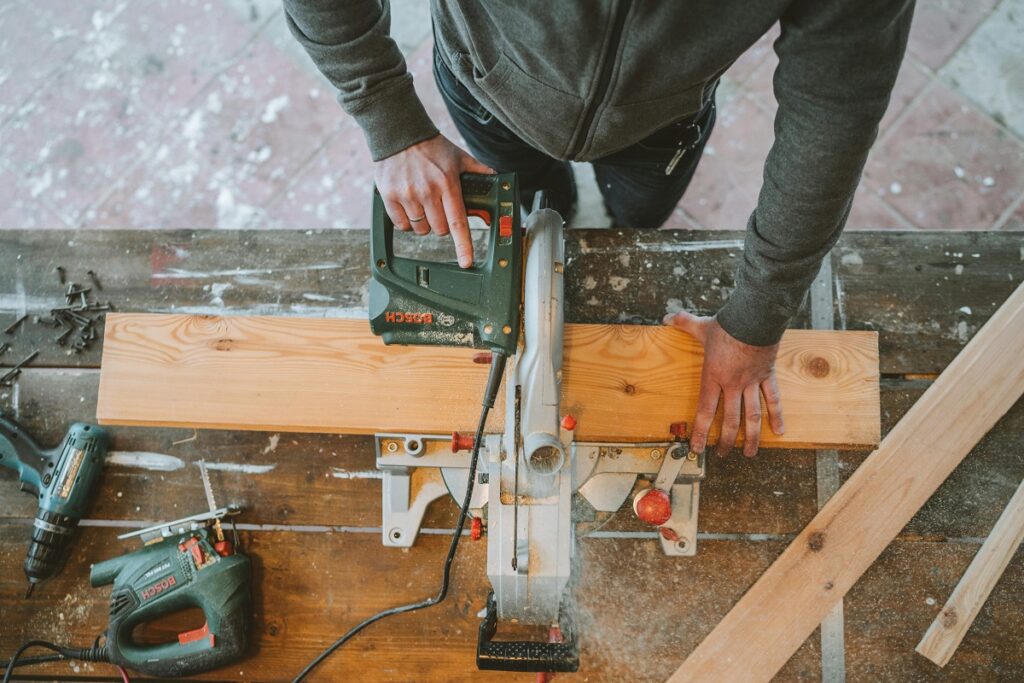
Welcome to the wilderness, where ingenuity and craftsmanship go hand-in-hand! If you’re a man who loves the DIY life—whether it’s crafting custom gear for your next camping trip, building rustic furniture for your cabin, or tackling a home made project—a solid set of woodworking tools is non-negotiable.
This guide is your blueprint to building the ultimate DIY man’s toolkit. We’ll cover the essential measuring, cutting, and shaping tools that will transform rough lumber into works of art. A well-chosen kit not only makes your projects easier but also dramatically improves the quality and precision of your work.
Phase 1: Measure Twice, Cut Once (Layout & Measuring Tools)
Precision is the foundation of excellent woodworking. Skimping on quality here means your joints won’t fit, and your final piece will look wonky.
| Tool Category | Essential Tools | Why You Need It | You might like this |
| Measuring | Tape Measure (25-foot) | The absolute staple. Get a durable one with a clear, easy-to-read lock. | [Durable Tape Measures] |
| Marking | Pencil & Marking Knife | A sharp pencil for rough cuts; a marking knife for scoring precise lines before cutting or chiseling. | [Woodworking Marking Knives] |
| Squaring | Combination Square (12-inch) | Essential for marking 90 and 45-degree angles, checking squareness, and setting tool depths. | [Precision Combination Squares] |
| Leveling | Spirit Level | Crucial for ensuring your shelves, tables, and cabinets are perfectly horizontal and vertical. | [High-Quality Spirit Levels] |

Phase 2: Powering Through (The Must-Have Power Tools)
While true craftsmanship often involves hand tools, modern power tools save time and deliver consistent results, especially for the DIY man tackling larger projects.
1. Cordless Drill/Driver and Impact Driver Combo
This is, arguably, the most essential power tool in your shop.
- Cordless Drill: For drilling holes and driving screws, offering clutch control for delicate work.
- Impact Driver: A game-changer for driving long, tough screws quickly and effortlessly, with more torque than a standard drill.
Pro-Tip: Invest in a reliable 18V or 20V system. You can share batteries across many tools!
2. Circular Saw
Until you graduate to a table saw (a significant investment), a circular saw is your best friend for breaking down large sheets of plywood or rough lumber.
- Key Use: Making long, straight cuts (rip cuts) and crosscuts.
3. Random Orbital Sander
Sanding is where your home made project gets its professional finish. A random orbital sander moves in tiny, random circles, eliminating noticeable scratch marks left by other sanders.
- Key Use: Smoothing surfaces before applying stain or finish.
Phase 3: The Art of the Hand Tool (Shaping & Finesse)
Hand tools provide the precision, control, and quiet satisfaction that power tools can’t match. They are vital for joinery, fine-tuning, and creating sharp details.
1. Wood Chisels
You’ll need a basic set of sharp chisels (1/4”, 1/2”, 3/4”, and 1”). They are essential for:
- Cleaning up joints (like dados and mortises).
- Trimming tenons.
- Paring away small amounts of material for a perfect fit.
Safety Note: Nothing is more dangerous than a dull tool. Get a sharpening kit (whetstone or diamond plates) and learn to keep your chisels razor-sharp.
2. Clamps (You Can Never Have Too Many)
You can’t glue wood without clamps! The more, the better. Start with a variety:
- Bar Clamps: For wide pieces like tabletops and panels.
- F-Style Clamps: General-purpose, versatile for holding work to the bench.
- C-Clamps: Small and powerful for localized clamping.
Opportunity: [Essential Woodworking Clamp Assortments]
3. Hand Saws
Even with power saws, a good hand saw is indispensable for quick, small cuts or detailed joinery. Look for a Japanese pull saw (often called a Ryoba or Dozuki). They cut on the pull stroke, making them incredibly precise and easy for beginners to control.
Phase 4: Safety & Workshop Essentials
No woodworking project is complete without prioritizing safety and organization.
- Safety Glasses: Protect your eyes from flying dust and chips. Get a good pair and wear them every time you run a machine.
- Hearing Protection: Power tools are loud. Over-the-ear muffs are highly recommended.
- Dust Masks/Respirator: Protect your lungs from fine sawdust, especially when sanding certain woods.
- Work Bench or Sawhorses: A sturdy, flat surface to hold your material is absolutely critical for safe and accurate cutting.
Ready to Craft Your Wilderness Gear?
From building a rugged camp box to crafting custom lures for your next fishing trip, this essential toolkit equips you with everything a DIY man needs to turn raw material into lasting projects.
Remember, the goal isn’t to buy every tool at once, but to invest in quality tools that will last a lifetime. As you tackle more complex projects (like dovetail joints or complex furniture), your tool collection will naturally grow.
What are you building next? Share your project ideas in the comments below!
Add knowledge!
Found this guide helpful? By purchasing your woodworking tools through the links below, you support the @faunaforestbrasil YouTube channel, helping us bring you more amazing wilderness and camping content!
Don’t forget to subscribe to our YouTube Channel, @faunaforestbrasil, for stunning views of rivers, forests, and the inspiration for your next home made creation!